Summary
Most DisplayLink-connected monitors can be rotated in macOS, but the correct setting location depends on your macOS version, DisplayLink Manager version, and Mac processor type.
For current macOS installations using newer versions of DisplayLink Manager, display rotation is normally adjusted in System Settings > Displays. Older Apple silicon systems using earlier DisplayLink Manager versions may instead need to use the rotation controls inside the DisplayLink Manager application.
This article explains which method to use and how to rotate a DisplayLink-connected monitor to Standard, 90°, 180°, or 270°.
Applicable To
- Plugable DisplayLink-based docking stations
- Plugable DisplayLink-based USB graphics adapters
- Mac computers using DisplayLink Manager for macOS
- macOS 11 Big Sur and newer, with notes for unsupported older configurations
This article applies to displays connected through DisplayLink technology. It does not apply to displays connected directly through native USB-C DisplayPort Alternate Mode, Thunderbolt, USB4, HDMI, or DisplayPort video outputs unless the product also uses DisplayLink for that specific display output.
Answer
For most current setups, rotate the DisplayLink-connected display from the macOS Displays settings:
- Open the Apple menu.
- Select System Settings.
- Select Displays.
- Select the external display you want to rotate.
- Use the Rotation or Rotate menu to choose the correct orientation.
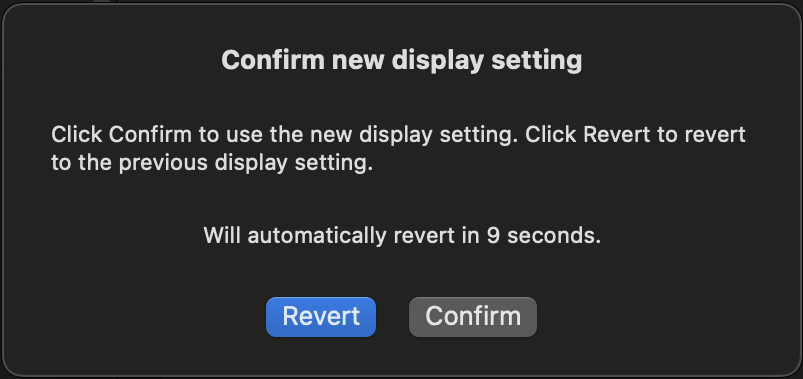
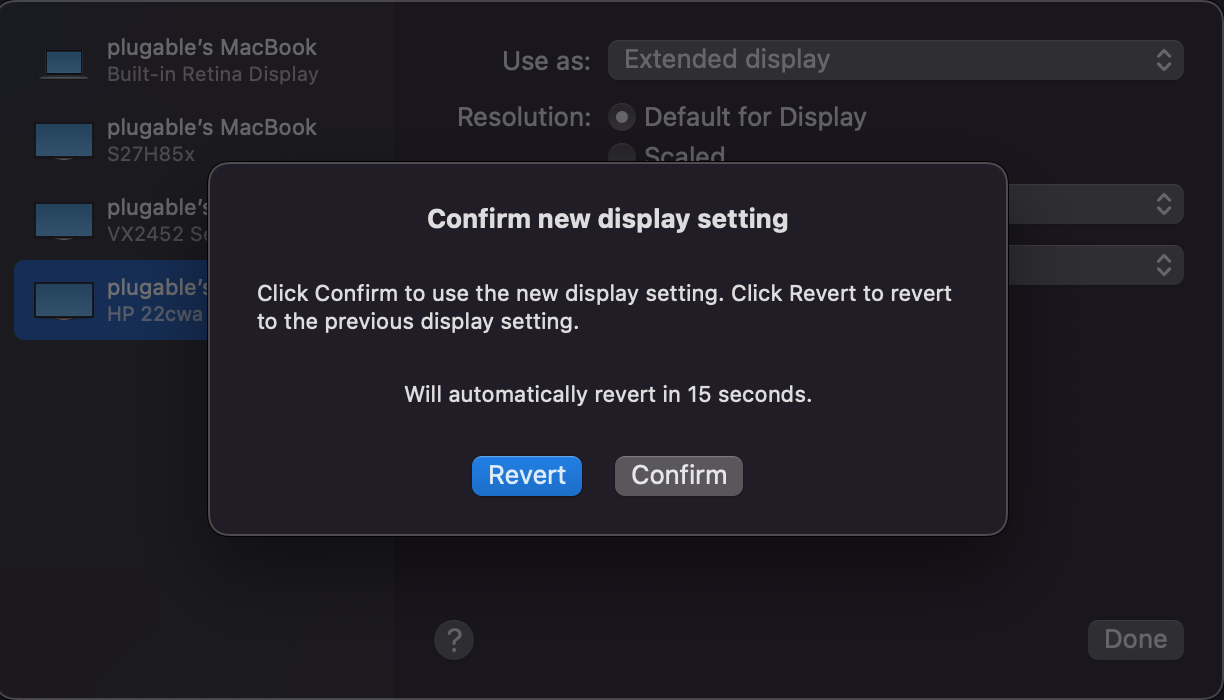
- Select Confirm if macOS asks you to confirm the change.
If the Rotation option does not appear, review the compatibility table and troubleshooting section below.
Which Method Should I Use?
| Mac and macOS configuration | Where to rotate the DisplayLink-connected display |
|---|---|
| macOS 13 Ventura or newer with DisplayLink Manager 1.12.0 or newer | Use System Settings > Displays. This is the preferred method for current macOS and DisplayLink Manager versions. |
| Intel-based Mac running macOS 11 Big Sur or macOS 12 Monterey | Use the built-in macOS Displays settings. |
| Apple silicon Mac running macOS 12 Monterey with DisplayLink Manager 1.6 through 1.11.x | Use the DisplayLink Manager application. Rotation is handled within DisplayLink Manager on these older Apple silicon configurations. |
| Apple silicon Mac running macOS 11 Big Sur | Display rotation is not supported for DisplayLink-connected displays in this configuration. |
| macOS 10.15 Catalina | Display rotation is not supported for DisplayLink-connected displays in this configuration. |
For best results, Plugable recommends using the latest DisplayLink Manager version available for your version of macOS. Current DisplayLink Manager installers are available here: Plugable DisplayLink Driver and Software Downloads.
Before You Begin
Confirm the following before changing display rotation:
- The DisplayLink Manager application is installed.
- DisplayLink Manager is running. A DisplayLink Manager icon should appear in the Apple menu bar when the application is active.
- The Plugable DisplayLink-based product is connected to the Mac.
- The monitor is connected to a DisplayLink-controlled video output on the Plugable product.
- The monitor itself can safely be used in the physical orientation you plan to use.
If you are using macOS 14 Sonoma, macOS 15 Sequoia, macOS 26 Tahoe, or newer, DisplayLink Manager also needs the required macOS screen recording permission in order for DisplayLink-connected displays to work.

Rotate a Display in macOS 13 Ventura or Newer
Use these steps for current macOS versions, including macOS 13 Ventura, macOS 14 Sonoma, macOS 15 Sequoia, and macOS 26 Tahoe, when using DisplayLink Manager 1.12.0 or newer.
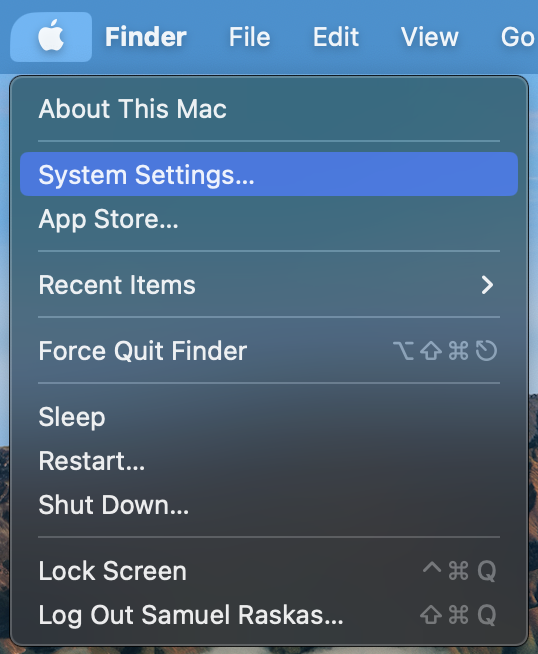
- Open the Apple menu in the upper-left corner of the screen.
- Select System Settings.

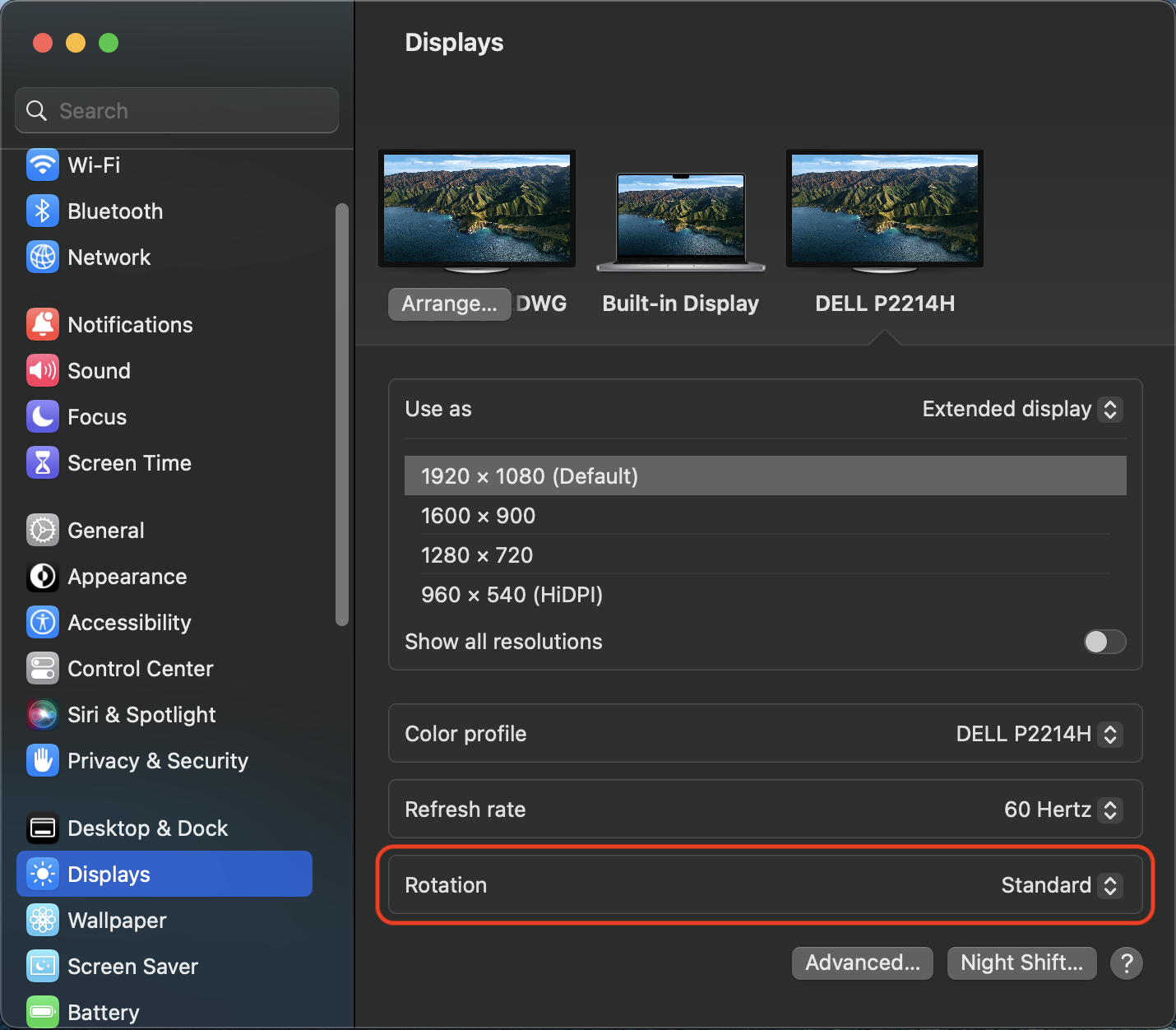
- In the System Settings sidebar, select Displays. You may need to scroll down to find it.
- Select the display you want to rotate from the display thumbnails at the top of the window.
- Find the Rotation or Rotate option.
- Open the rotation menu and select the desired orientation, such as Standard, 90°, 180°, or 270°.

- If macOS displays a confirmation prompt, select Confirm to keep the new rotation setting.

Rotate a Display in macOS 11 Big Sur or macOS 12 Monterey on an Intel-based Mac
On Intel-based Macs running macOS 11 Big Sur or macOS 12 Monterey, DisplayLink-connected displays can be rotated from the built-in macOS display settings.
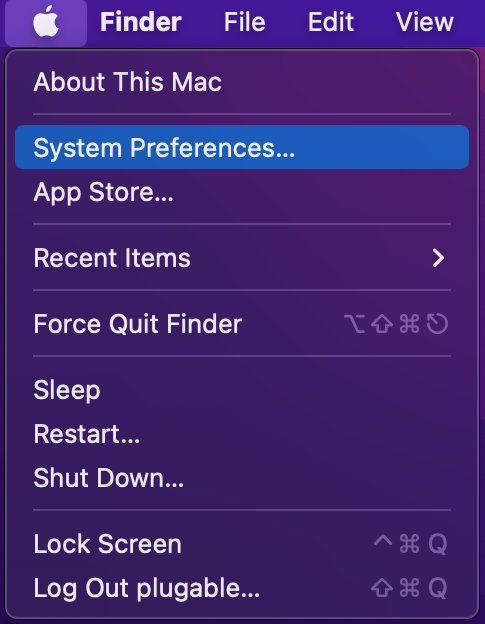
- Open the Apple menu.
- Select System Preferences.

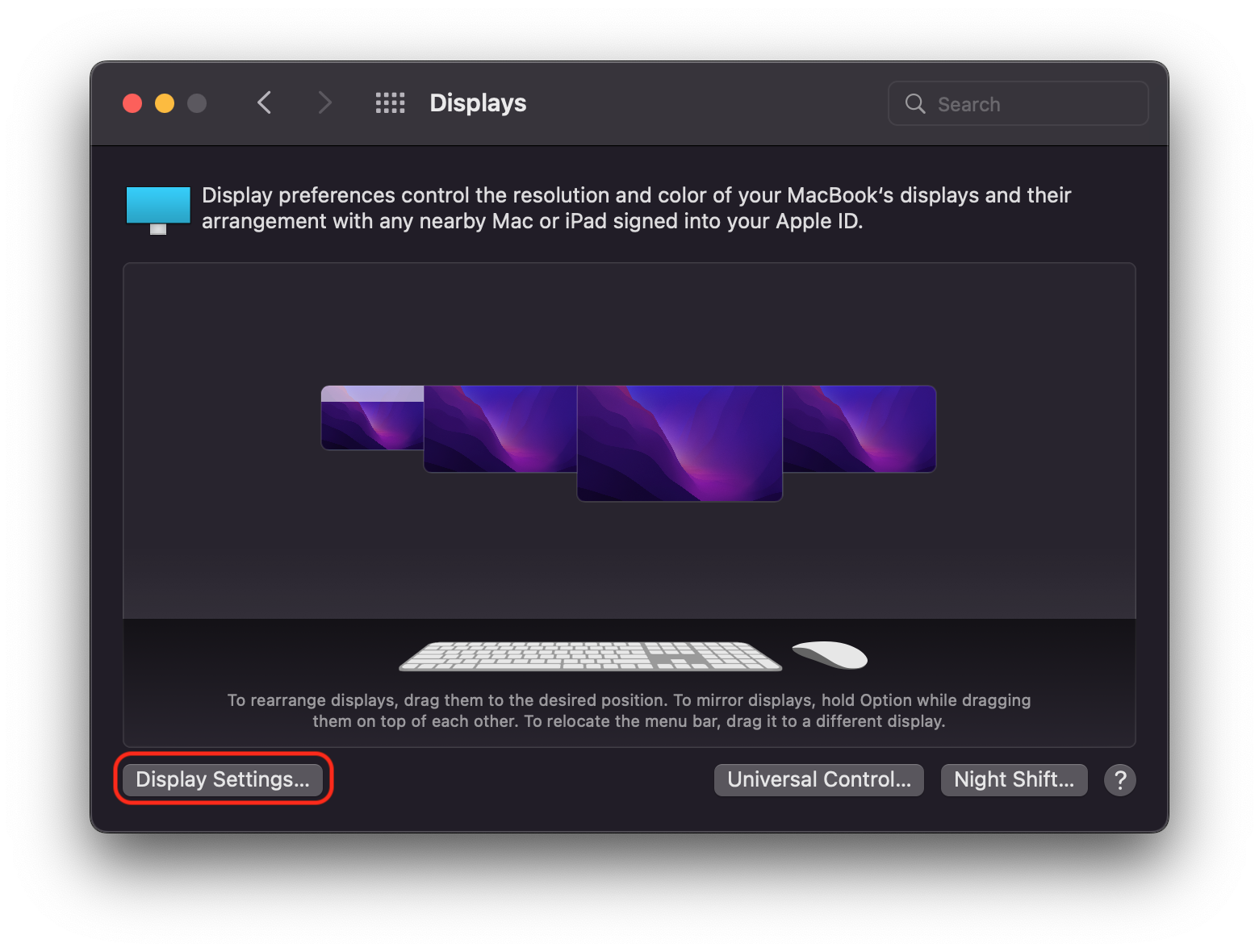
- Select Displays.
- Select Display Settings....
Select Display Settings to configure each connected display.- Select the external display you want to rotate.
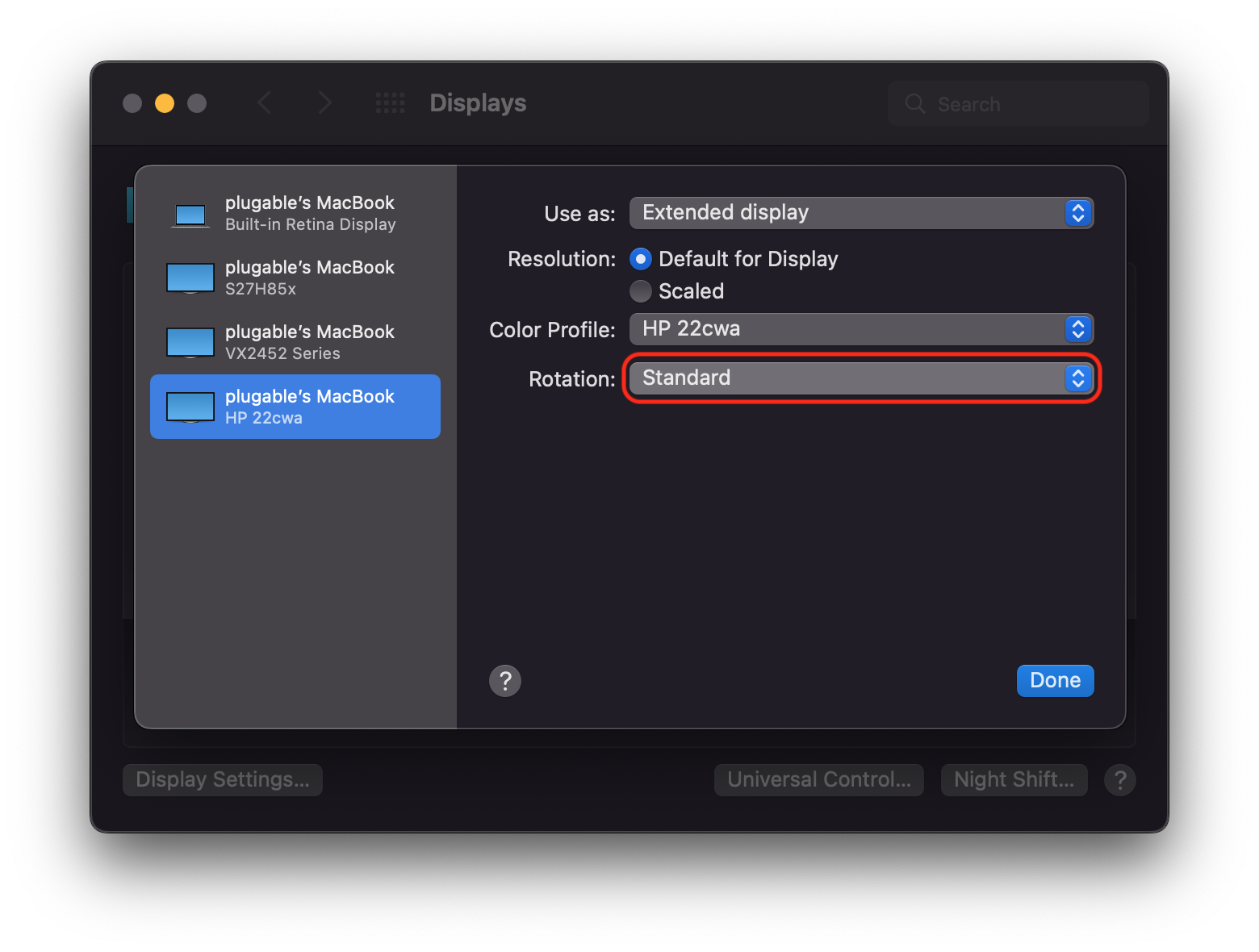
- Use the Rotation or Rotate menu to choose the desired orientation.
Select the display, then choose the desired rotation.- If macOS asks you to confirm the change, select Confirm.

Legacy Apple Silicon Method: DisplayLink Manager 1.6 through 1.11.x
Use this section only if you are using an Apple silicon Mac on macOS 12 Monterey with DisplayLink Manager 1.6 through 1.11.x. On these older configurations, rotation is adjusted from within the DisplayLink Manager application instead of the macOS Displays settings.
For current macOS versions and current DisplayLink Manager versions, use the macOS System Settings > Displays method above instead.
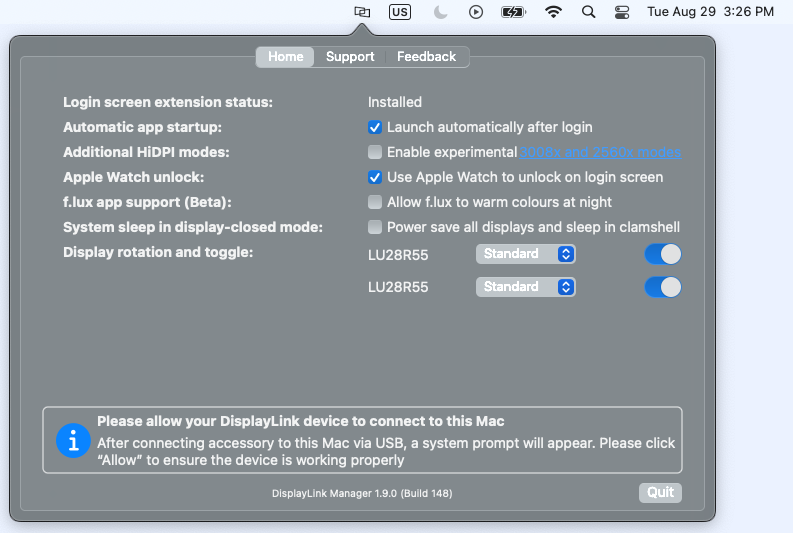
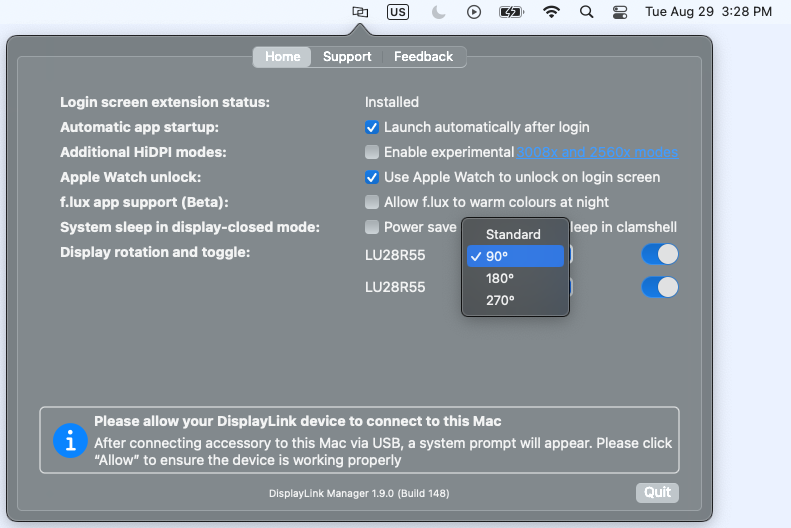
- Click the DisplayLink Manager icon in the Apple menu bar to open the DisplayLink Manager window.

- Find the display you want to rotate in the Display rotation and toggle section.
- If multiple displays are listed with the same name, move your pointer over a display name. A red border should appear on the matching physical display.
- Open the rotation menu next to the display and choose the desired orientation.

If You Do Not See the Rotation Option
If the Rotation or Rotate option does not appear, check the following:
- Make sure the monitor is connected to a DisplayLink-controlled video output on the Plugable product.
- Make sure DisplayLink Manager is installed and running.
- Make sure the DisplayLink-connected display is active and not toggled off in DisplayLink Manager.
- Install the latest DisplayLink Manager version available for your version of macOS.
- Confirm that the monitor is not being mirrored in a way that prevents separate rotation controls from appearing.
- Confirm that the display supports rotation in macOS. Apple notes that the Rotation option appears only when a compatible external display is connected.
- If you are using an Apple silicon Mac running macOS 11 Big Sur, DisplayLink display rotation is not supported in that configuration.
- If you are using macOS 10.15 Catalina, DisplayLink display rotation is not supported in that configuration.
Troubleshooting
1. The DisplayLink display is not listed in System Settings
If the DisplayLink-connected display does not appear in System Settings > Displays, first confirm that DisplayLink Manager is installed, running, and allowed in macOS privacy settings.
For full setup steps, see Plugable’s current DisplayLink Manager installation guide: DisplayLink Manager App Installation Instructions for macOS.
2. The display rotates, but the image looks sideways or upside down
Try a different rotation value. The correct selection depends on how the physical monitor is positioned. For example, a monitor physically rotated clockwise may need a different setting than a monitor physically rotated counterclockwise.
3. The display goes blank after choosing a rotation value
Wait for the macOS confirmation timer to expire, or choose Revert if the confirmation prompt is visible. Then try another rotation value or return the display to Standard.
4. The rotation option only appears for some displays
Rotation support can depend on the display, macOS version, DisplayLink Manager version, and how the display is connected. Confirm that the display is connected through a DisplayLink-controlled output and that your macOS and DisplayLink Manager versions support rotation.
Important Notes
- The rotation setting location has changed across DisplayLink Manager versions. Current versions normally use macOS System Settings > Displays.
- The older DisplayLink Manager rotation controls are included here only for legacy Apple silicon configurations using DisplayLink Manager 1.6 through 1.11.x.
- macOS may ask you to confirm a rotation change. If you do not confirm, macOS may automatically revert to the previous setting.
- Some displays may not expose a rotation control in macOS.
- Always confirm that your physical monitor stand or mount supports portrait or rotated operation before rotating the monitor.
Need Assistance?
If you are unable to rotate a DisplayLink-connected display after following the steps above, contact Plugable Support at support@plugable.com. Please include the Plugable product model, your Mac model, your macOS version, your DisplayLink Manager version, and a brief description of how each monitor is connected.
For the fastest assistance, please also include the output from Plugable’s PlugDebug diagnostic utility: PlugDebug.